

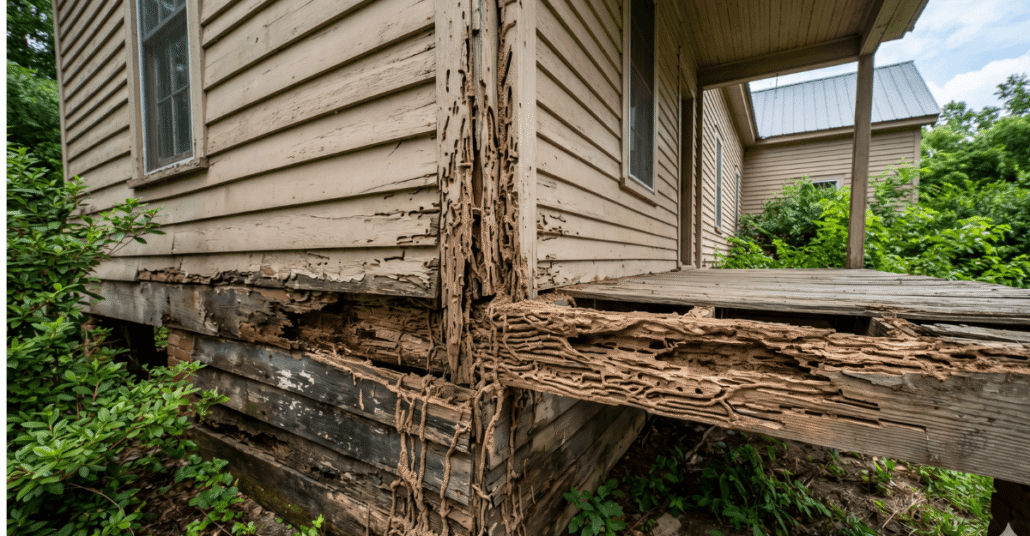
Can You Sue a Termite Bond Company for Failing to Prevent Damage to Your Mississippi Home?
Discovering that your home is being eaten from the inside out is a devastating realization. For homeowners along the Mississippi Gulf Coast, the threat of wood-destroying insects is a constant reality. Our humid, subtropical climate creates the perfect breeding ground for these silent destroyers. When you purchase a home or maintain a property, you likely rely on a pest control company to protect your investment. You pay annual renewal fees for a termite bond, trusting that the professionals are doing their jobs.
When that trust is broken, the financial and emotional toll is immense.
What Are the Legal Obligations of a Pest Control Company Under a Termite Bond?
A termite bond company in Mississippi is legally obligated to perform regular inspections, apply necessary treatments according to state regulations, and honor the terms of their contract. This often includes covering repair costs for new damage if an active infestation occurs while the bond remains active.
A termite bond is essentially a warranty or service contract between a homeowner and a pest control provider. However, not all bonds are created equal. It is vital to understand the specific language within your agreement. Generally, there are two primary types of bonds issued on the Gulf Coast. A “retreat-only” bond simply guarantees that the company will come back and apply more chemicals if bugs are found. A “repair and retreat” bond is much more comprehensive, acting as a form of insurance where the company agrees to cover the costs of repairing structural damage caused by a new infestation.
Pest control operators in our state are governed by the Mississippi Department of Agriculture and Commerce. They are required to follow specific protocols for initial soil treatments, bait station monitoring, and annual inspections. When a company takes your yearly premium but fails to uphold these standards, they open themselves up to civil liability.
Common obligations that companies fail to meet include:
- Thorough Annual Inspections: Sending a technician who simply walks the perimeter of the house for five minutes without checking the crawlspace or attic.
- Proper Chemical Application: Diluting termiticides below the manufacturer’s recommended strength to save the company money.
- Adequate Trenching and Drilling: Failing to drill through concrete patios or porches to apply treatment to the soil directly abutting the foundation walls.
- Warning of Conducive Conditions: Neglecting to inform the homeowner about issues like plumbing leaks, earth-to-wood contact, or poor drainage that invite infestations.
How Can You Prove a Termite Company Was Negligent in Mississippi?
Proving negligence requires demonstrating that the termite company failed to meet the standard of care expected in the pest control industry. This includes missing obvious signs of infestation, using improper chemical treatment methods, or failing to identify conducive conditions like wood-to-ground contact.
To win a negligence claim, you must show that a reasonably competent pest control professional operating in communities like Gulfport or Long Beach would have acted differently under the same circumstances. Defense attorneys for pest control corporations will almost always try to blame the homeowner. They will argue that the homeowner introduced new soil against the foundation, failed to fix a leaking roof, or that the infestation originated in an area of the home that was legally “inaccessible” during the inspection.
Defeating these defenses requires a detailed investigation into the company’s service history. We look closely at the graphing and treatment records. If a company claims they treated the entire perimeter of your slab foundation on Highway 90, but there are no drill marks in the adjacent concrete driveway, their records contradict the physical evidence.
Signs of pest control negligence often include:
- Failing to note “frass” (termite droppings) or discarded wings on windowsills during a routine inspection.
- Ignoring active mud tubes forming on pier-and-beam foundations.
- Marking an area as “inaccessible” on a WDI report simply because it was difficult to reach, rather than genuinely blocked.
- Allowing bait stations to sit empty or unmonitored for years while continuing to charge renewal fees.
The Unique Threat of Formosan Termites Along the Gulf Coast
In the legal landscape of property damage claims in our region, the Formosan subterranean termite is in a class of its own. Unlike native species, Formosan colonies are massive, sometimes containing millions of insects. They are highly aggressive and can consume wood at a terrifying rate. These insects are particularly prevalent in the coastal counties of Harrison, Hancock, and Jackson.
The speed at which Formosans destroy property drastically changes the nature of a legal dispute. A standard native colony might take years to cause severe structural issues. A Formosan colony can hollow out weight-bearing wall studs and roof supports in a matter of months. We frequently review cases from Pascagoula to Waveland where homeowners notice minor drywall bubbling, only to open the wall and find the framing entirely gone.
What makes Formosans particularly dangerous and what makes pest control negligence so costly is their ability to build “carton nests” above ground. If they find a moisture source, such as a slow leak behind a shower or condensation from an HVAC unit in an attic, they do not need to return to the soil. Standard perimeter soil treatments will not stop an above-ground carton nest. If your pest control provider failed to identify the specific risk of Formosan termites, especially if your property is located in known hot zones near Keesler Air Force Base or the older, historic districts of Pass Christian, they may have breached their professional duty.
What Damages Can You Recover in a Termite Lawsuit Against a Bond Company?
Homeowners who successfully sue a termite bond company can typically recover compensation for the structural repair costs of the home, expenses for temporary relocation during extensive repairs, the cost of proper termite eradication, and, occasionally, punitive damages if fraud occurred.
The financial impact of a severe infestation goes far beyond patching a few pieces of sheetrock. When structural integrity is compromised, contractors often have to lift the home, replace sill plates, rebuild exterior walls, and replace damaged electrical wiring that the insects have chewed through. These repairs easily run into the tens or hundreds of thousands of dollars.
Furthermore, even after a home is fully repaired, it may suffer from a “diminution of value.” Under Mississippi law, if the market value of your home is permanently reduced because you must now disclose a history of massive termite damage to future buyers, you may be entitled to recover the difference in that property value.
Recoverable damages in these disputes often include:
- Direct Repair Costs: The estimates and invoices from licensed general contractors to fix the physical damage.
- Eradication Costs: The fees paid to a new, reputable pest control company to properly tent the house or treat the soil.
- Alternative Living Expenses: The cost of a hotel or rental home if your property is deemed structurally unsafe to occupy during repairs.
- Diminution of Value: Compensation for the permanent loss of property value.
- Legal Fees and Punitive Damages: In cases where the pest control company engaged in intentional fraud or gross negligence, courts may award punitive damages designed to punish the corporate wrongdoing.
How Long Do You Have to File a Termite Damage Lawsuit in Mississippi?
Under Mississippi law, property owners generally have three years to file a termite damage lawsuit, starting from the date the damage was discovered or reasonably should have been discovered. This protection, known as the discovery rule, applies heavily to hidden latent defects.
The “statute of limitations” is the strict legal deadline for filing a claim. While the general rule for property damage in Mississippi is three years, the clock does not necessarily start on the day the negligent inspection occurred or the day you bought the house. Because wood-destroying insects eat from the inside out, the damage is almost always a “latent defect,” meaning it is hidden deep within the structural framing and not visible to the untrained eye.
The timeline typically begins when the damage manifests. This might be the day your foot goes through a spongy floorboard, the day a contractor opens a wall for a bathroom remodel, or the day a termite swarm erupts in your living room.
Key timeline factors to remember:
- Reasonable Diligence: You cannot ignore obvious signs. If you saw swarming insects a year ago and chose to do nothing, the defense will argue the clock started ticking on that day.
- Statute of Repose: Mississippi also has a “statute of repose” which can act as an absolute barrier to claims filed many years after the specific act of negligence or construction, regardless of when you discovered the bugs.
- Contractual Limitations: Some termite bonds attempt to write their own shortened deadlines into the fine print. These clauses require immediate legal review to determine if they are enforceable under state law.
Filing Your Termite Claim in Mississippi Gulf Coast Courts
Filing a civil claim against a corporate pest control provider requires a thorough understanding of the local court systems and procedural rules. Depending on where your home is located, the venue for your lawsuit will vary.
In Harrison County, which encompasses cities like Gulfport, Biloxi, and Long Beach, civil cases involving significant property damage are typically handled in the Harrison County Circuit Court. This court has two judicial districts, with courthouses located in both Gulfport and Biloxi. If your property is located further east in Ocean Springs, Gautier, or Pascagoula, your case will likely be filed in the Jackson County Circuit Court.
Litigating in these local venues means understanding the specific procedures required to move a case forward. Corporate defense teams for national pest control chains are aggressive. They will file motions to dismiss, attempt to force the case into binding arbitration based on hidden clauses in your service agreement, and use procedural delays to wear you down. Having local legal representation that understands the tendencies of the local civil dockets is highly beneficial.
What Evidence Is Needed to Build a Strong Termite Litigation Case?
Building a successful termite bond dispute requires gathering your original service agreement, treatment records, the Wood Destroying Insect Report, high-resolution photographs of the active damage before repairs, and an independent evaluation from a licensed structural engineer or third-party pest inspector.
When you discover an infestation, your first instinct is usually to tear out the ruined wood and fix it immediately. Doing so without proper documentation can destroy the very evidence you need to prove your case. The pest control company will inevitably try to claim that the damage is “old,” that it happened years ago, before they assumed responsibility for the property, and that the colony is no longer active.
Defeating the “old damage” defense requires a clear paper trail and expert analysis. We frequently work with forensic entomologists and structural engineers who can examine the consumption patterns and frass to date the damage accurately.
Essential evidence to preserve includes:
- The Property Condition Disclosure Statement (PCDS): If you recently bought the home, this shows what the seller claimed about prior infestations.
- The Official WDI Report: This document establishes the exact conditions the inspector claimed existed on the day of the inspection.
- Live Samples: If possible, keeping a sealed sample of the swarming insects or workers helps entomologists confirm the exact species (e.g., Formosan vs. Eastern Subterranean).
- Undisturbed Photographs: Extensive visual documentation of the mud tubes, damaged wood, and surrounding moisture conditions before any contractor begins demolition.
Immediate Steps to Protect Your Home and Your Legal Claim
The moments immediately following the discovery of severe structural damage are critical. The actions you take and the actions you avoid will shape the future of any legal claim you make against the responsible parties.
First, stop and document the scene. Resist the urge to pull down the drywall or spray over-the-counter bug spray. Take numerous high-resolution photos and videos that clearly capture the location and extent of the damage.
Next, secure your essential records. Find your closing documents, your current termite bond contract, and every service ticket the pest control company has left at your door over the years.
Finally, do not rely on the company that caused the problem to tell you how bad the problem is. Get an independent professional inspection. Hire a neutral, third-party structural engineer or a competing pest control manager to conduct a thorough assessment. Their report should detail the severity of the damage and the likely duration the infestation was active. Do not sign any waivers, releases, or accept any small settlement checks from your current bond provider until you fully understand the scope of the destruction.
We Are Here to Support You
Finding out that your home has been structurally compromised by pests is a highly stressful experience, especially when you trusted a professional company to prevent it. At Reeves & Mestayer, we have dedicated our practice to representing property owners and injured individuals across the Mississippi Gulf Coast. We understand the specific building codes, the aggressive nature of local termite species, and the statutes that apply in our local court systems. We approach these complex property disputes thoroughly, working to ensure that negligent parties are held financially accountable for the damage they allowed to happen.
Contact us today to schedule a consultation regarding your property damage claim.


