

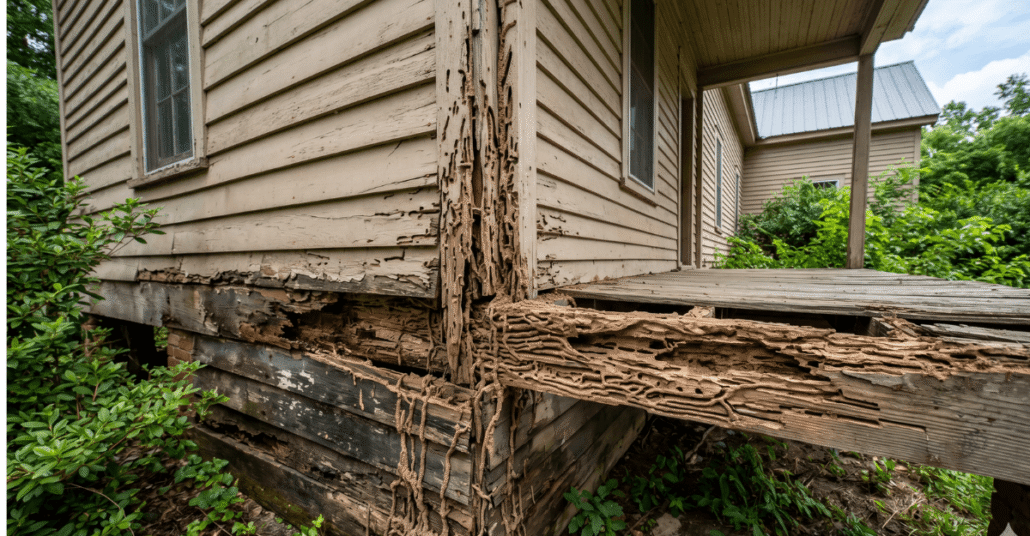
How Long Do You Have to File a Termite Damage Lawsuit?
One house. Several possible defendants. More than one deadline. A Mississippi termite damage lawsuit can name the seller who hid the problem, the inspector who missed it, the pest control company that cleared the home, and the builder who framed it, and each of them may answer to a separate legal clock that starts on a different day.
The insects don’t keep that calendar. Formosan subterranean termites are now established in at least part of 26 Mississippi counties, and their carton nests let colonies keep feeding inside walls even after a conventional soil treatment. Years can pass between closing and the day a roofer lifts decking or a new floor won’t sit level. At Reeves & Mestayer, we represent Gulf Coast homeowners in disputes with sellers, inspectors, and pest control companies over termite damage that was concealed or overlooked.
What Is the Statute of Limitations for a Termite Damage Lawsuit in Mississippi?
Mississippi Code § 15-1-49, the state’s general limitations statute, gives most termite damage lawsuits a three-year filing window. That window covers fraud, negligence, and breach of contract claims against a seller or pest control company. A licensed home inspector is the exception, with a separate and stricter deadline of its own.
Fraud and written contracts don’t get their own filing periods in Mississippi. As a result, the general limitations statute reaches nearly every theory a buyer brings: fraudulent misrepresentation, negligent misrepresentation, negligence, and breach of contract. One lawsuit can carry several claims against several defendants, yet each claim is timed on its own.
Everything turns on when a claim accrued, meaning the moment the legal wrong was complete and the homeowner gained the right to sue. That is when the window opens. Miss it, and the case usually ends there. Defendants raise the deadline as a defense, and a court can dismiss the claim however badly the house is damaged.
When Does the Clock Start on Hidden Termite Damage?
Mississippi’s latent-injury rule holds off the limitations clock on hidden termite damage until the homeowner discovers it, or reasonably should have. Discovery of the damage is what counts. Waiting for an entomologist or contractor to confirm that termites caused it, or to identify who is responsible, does not push the start date back.
A court treats damage as latent only if it was genuinely hidden, so that a reasonable owner had no realistic way to spot it. The tougher fight is usually over when a homeowner “should have” known.
Warning signs that can start the clock, sometimes before anyone links them to termites, include:
- Swarmers inside the house or circling porch lights, particularly in May and June, when Formosan termites swarm
- Bubbling or blistered paint on drywall and window trim
- Pencil-width mud tubes climbing slab edges or crawlspace walls
- Doors or windows that start sticking, and trim that sounds hollow when tapped
- A soft or sagging patch of floor that was level at closing
On older raised cottages around the Back Bay of Biloxi and along U.S. 90, those signs often appear first in crawlspaces owners seldom enter. Expect a defendant to argue that the buyer should have looked sooner.
Can a Seller’s Cover-Up Buy You More Time to File?
Yes. Mississippi Code § 15-1-67 delays the limitations period when a seller fraudulently conceals termite damage. The clock waits until the buyer discovers the fraud, or could have with reasonable diligence. Concealment usually takes an affirmative act, such as a false answer on the disclosure form or repairs staged to keep damage out of sight.
Two separate discoveries are in play. Finding the damage is one; learning that the seller knew about it is another, and the fraudulent concealment statute is concerned with the second.
Take a hypothetical Long Beach buyer who pulls up flooring in a back bedroom, finds chewed joists, and assumes the termites are new arrivals. Twelve months later, a neighbor mentions that a pest company treated the house twice before it was listed. A concealment-based claim may begin to run from that conversation.
Reasonable diligence still matters. Blank termite answers on the disclosure form or a treatment sticker in the attic are the kind of red flags that, if ignored, can cost a buyer the benefit of delayed accrual.
How Long Do You Have to Sue a Home Inspector Who Missed Termites?
Claims against a licensed home inspector must be filed within three years after the inspection was completed, under Mississippi Code § 73-60-15. The deadline runs from the inspection date rather than from discovery, so it can expire before a buyer ever notices a swarm or a soft floor joist.
Here the latent-injury rule is no help. It applies only where no other limitation period is prescribed, and the home inspector statute prescribes one, pinned to a fixed event instead of the buyer’s discovery.
Consider a hypothetical timeline for a family relocating to Ocean Springs:
- March 2023: A licensed inspector examines a D’Iberville home and reports no wood damage.
- April 2023: The family closes and moves in.
- March 2026: The inspector deadline passes.
- July 2026: A contractor replacing a sliding door uncovers termite-eaten framing around the opening.
By then, the inspector claim is likely gone, while claims against the seller may still be alive. Courts haven’t settled whether a seller’s fraud could stretch an inspector’s deadline, so the date on the inspection report is the first thing to check.
What Deadline Applies to a Pest Control Company?
A pest control company’s negligent wood destroying insect report or breached termite contract generally falls under the same general limitations period that governs claims against sellers. The start date depends on the claim. A missed infestation may run from discovery, while a broken retreatment promise typically runs from the date of the breach.
Termite contracts come with written obligations. The Mississippi Department of Agriculture and Commerce pest control rules require the contract to be in writing, to guarantee the work for at least one year to the original owner and later owners, and to state in bold whether it covers damage repairs or retreatment only.
Operators also have to reinspect before the contract expires and every year after that. Choosing not to renew requires written notice to the owner at least 30 days in advance. Any skipped reinspection or refused retreatment can be a breach in its own right.
Pull out the termite bond and check:
- Is it a repair bond or a retreat-only bond?
- When did each annual reinspection happen, and were any years missed?
- Did the bond transfer to you at closing, or did it lapse?
- Was a written nonrenewal notice sent, and when?
- Which company issued the official wood destroying insect report for your sale?
Keep the bond and the WDI report straight, because they are different documents. Even with no bond in place, a clean report on an infested Gulfport home can support a negligence claim against the company that inspected it.
Can Fine Print Shorten Your Time to File?
Usually not. Mississippi Code § 15-1-5 makes void any contract term that changes the limitation periods in the state’s general limitations chapter. A sales contract or termite agreement that demands suit within one year generally cannot shrink the filing period for claims against sellers and pest control companies.
The anti-shortening statute exists to keep limitation periods equal for every litigant. A signature on fine print does not change that.
Shortened suit deadlines tend to turn up in:
- Purchase agreement addenda drafted by the listing side
- The terms and conditions of a termite bond
- Disclaimers printed on a pest company’s report or invoice
- Online terms clicked through while booking a treatment
Inspection agreements are less clear-cut. The inspector deadline lives in a different title of the Mississippi Code, outside the chapter the anti-shortening rule covers, so a clause in an inspection contract deserves a careful read. Arbitration clauses are their own issue: they may move a claim to a different forum without changing how long you have to bring it.
Does a Newly Built Home Change the Deadlines?
Termite damage in a newly built Mississippi home can bring warranty rights against the builder, a strict written-notice deadline, and a statute of repose for construction defects. Those builder-specific rules apply alongside the general deadlines for claims against sellers, inspectors, and pest control companies.
Plenty of owners in newer subdivisions around Ocean Springs, D’Iberville, and north Harrison County count on a builder’s pretreatment to protect them for years. When it doesn’t, the builder enters the picture.
What Warranty Covers Termite Damage in a New Home?
Under Mississippi Code § 83-58-5, builders warrant a new home free from defects caused by noncompliance with building standards for one year, and free from major structural defects for six years. Termite damage to new-construction framing may qualify if it traces back to a builder’s failure to follow pretreatment or building-code requirements.
Common culprits include framing or form boards left touching soil, siding run below grade, and grading that pushes water toward the slab. Whether the damage rises to a major structural defect, and so falls under the longer warranty, is usually settled by a structural engineer’s report.
How Fast Must You Notify the Builder?
A new-home owner has 90 days after learning of a defect to notify the builder in writing by registered or certified mail under Mississippi Code § 83-58-7, and must give the builder a reasonable opportunity to repair. A lawsuit filed before completing that notice process will be dismissed without prejudice.
In the letter, describe the damage and include photographs, then hold on to the mailing receipt. Following the builder-notice statute does not waive a breach of contract claim; that claim stays available next to the warranty.
When Does the Six-Year Construction Deadline Cut Off Claims?
Most construction-defect claims against builders and designers are barred by Mississippi Code § 15-1-41 once six years pass after the owner’s written acceptance or first occupancy of the home, whichever comes first. This is a statute of repose, and it runs no matter when the termite damage is discovered.
The count begins with the first owner, not with your closing. Picture a hypothetical buyer who purchases a seven-year-old Bay St. Louis home from its original owner: a construction claim against the builder is likely closed, although claims against the seller or the inspector may still be open.
What Should You Do the Day You Find Termite Damage?
Treat the discovery date as evidence. In a Mississippi termite case, it often determines which deadlines remain open. Documenting that date, preserving the damaged wood, and securing pest control and inspection records early protects proof that can vanish long before any filing deadline runs out.
None of these steps is complicated, and most are free:
- Note the discovery. Save your messages with the contractor who found the damage, and take date-stamped photos before anyone starts repairs.
- Hang on to the damaged wood. Ask the remediation crew to set removed framing aside rather than haul it away.
- Ask for records in writing. Pest control operators must keep treatment records, inspection reports, and contracts only while a contract is current and for two years after it expires.
- Gather the closing file. Find the inspection agreement and report, the WDI report, and the Property Condition Disclosure Statement.
- Don’t rush to sign a release. A pest company offering “free retreatment” may want a signed release in return.
- Notify the builder if the home is new. That notice window can close long before any lawsuit deadline does.
Where Do You File a Termite Damage Lawsuit on the Mississippi Gulf Coast?
Gulf Coast termite damage lawsuits are typically filed in the county where the home sits or where a defendant resides. Under Mississippi Code § 9-9-21, the county courts in Harrison and Jackson Counties can hear claims up to $200,000, and larger cases go to circuit court. Only a filed complaint stops the limitations clock.
In Harrison County, the circuit court is split into two judicial districts, with courthouses in Gulfport and Biloxi. Jackson County cases go to Pascagoula; Hancock County cases go to Bay St. Louis.
Some steps feel like progress but generally leave the clock running:
- A demand letter to any defendant
- A complaint to the Mississippi Real Estate Commission about an inspector or agent
- A complaint to the Bureau of Plant Industry about a pest control operator
- Settlement discussions with a defendant’s insurance adjuster
Calendar the earliest deadline that could apply, not the most forgiving one.
Speak With Our Mississippi Termite Damage Attorneys Before a Deadline Passes
At Reeves & Mestayer, we start by lining up the dates: the inspection, the disclosure statement, the termite bond, and the closing. From there, our attorneys can tell you which claims are still open and which clock is closest to running out. We represent homeowners across Biloxi, Gulfport, Ocean Springs, Long Beach, D’Iberville, Pascagoula, and Bay St. Louis.
Call (228) 374-5151 for a free, confidential consultation. Bring the paperwork you have; we can help track down the rest.
Frequently Asked Questions
My Inspector Claim Has Expired. Can I Still Sue the Seller?
Yes. Every defendant has its own deadline, so an expired inspector claim has no effect on a timely claim against the seller, a pest control company, or a builder.
Does a New Swarm After Treatment Start a New Deadline?
It can. Fresh damage from a reinfestation, or a pest control company’s refusal to honor a retreatment promise after a new swarm, may create a new claim with its own accrual date. Claims that have already expired stay expired.
Does Military Service Extend the Filing Deadline?
For servicemembers, yes. Under the federal Servicemembers Civil Relief Act, 50 U.S.C. § 3936, a servicemember’s period of military service is left out when state filing deadlines are computed. Families stationed at Keesler Air Force Base or the Naval Construction Battalion Center in Gulfport should account for that time in any deadline calculation.
Will Homeowners Insurance Cover Termite Damage While the Case Is Pending?
Usually not. Most standard homeowners policies exclude damage from termites and other insects, which often leaves repairs out of pocket while a claim moves forward. Save every repair invoice so those losses are documented.
Can a Real Estate Agent Be Sued for Hiding Termites?
Possibly. A listing or buyer’s agent who knew about termite damage and kept quiet, or who made false statements about it, may share liability with the seller. Those claims generally follow the same limitations rules as claims against the seller.
How Long Does a Termite Damage Case Take After Filing?
That depends on how many defendants are involved, whether engineering and entomology testimony is needed, and how busy the court’s docket is. Many termite cases settle or resolve in mediation once evidence has been exchanged; others go to trial.


