

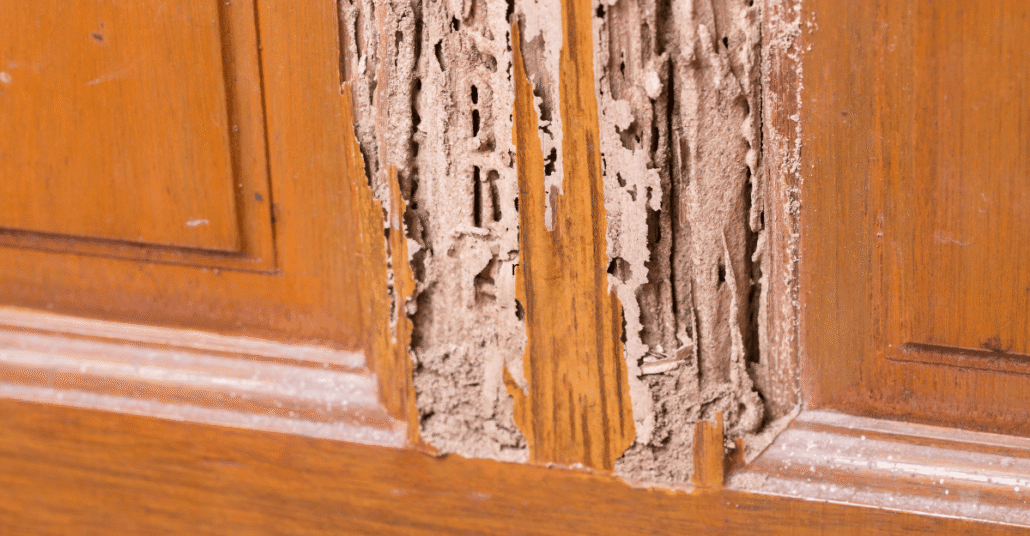
How Sellers Conceal Termite Damage in a Mississippi Home Sale, And How Courts See It
The floor joist crumbled when the contractor pushed a screwdriver into it. That is how many Mississippi buyers learn the truth about a house they already own: months after closing, during a remodel, when someone finally opens a wall the seller kept closed.
A seller who knew about termite damage and hid it does not get to hand you the repair bill. Mississippi requires sellers to disclose what they know about wood-destroying insects, and our appellate courts have defined what proof of concealment looks like. The evidence usually survives the cover-up. It sits in a pest control company’s records, on an inspection sticker under a kitchen sink, and in the blank spaces on a signed disclosure form.
These cases turn on how the damage was hidden and what the seller knew when the form was signed. At Reeves & Mestayer, our attorneys handle termite and property misrepresentation claims across the Mississippi Gulf Coast, from Biloxi and Gulfport to Ocean Springs and Pascagoula.
What Counts as Concealing Termite Damage Under Mississippi Law?
Concealment means the seller knew about termite activity or damage and hid it, either physically or on paper. Mississippi law shields a seller only for facts outside their personal knowledge, so nearly every case turns on what the seller actually knew before closing.
Mississippi Code § 89-1-501 requires the seller of a one-to-four-unit residence to deliver a written property condition disclosure statement, and Section 89-1-511 requires every disclosure to be made in good faith. Under Section 89-1-505, a transferor is not liable for an omission that was not within the transferor’s personal knowledge. That language protects ignorance. It does not protect silence.
So the defense is almost always the same sentence: I never saw a termite. Disproving it starts with paper rather than wood, and an unfinished form carries its own cost, because Mississippi Code § 89-1-503 presumes that a buyer who receives an incomplete disclosure is on notice to ask questions.
Which Questions on the Mississippi Disclosure Form Do Sellers Answer Falsely?
Section D of the Mississippi Property Condition Disclosure Statement asks five termite questions: recurring pest problems, damage caused by pests, which company treated the property, which contractor made repairs, and whether a termite warranty exists. Sellers hiding damage usually answer no to the first two and leave the rest empty.
The termite items sit in Section D of the Property Condition Disclosure Statement, headed History of Infestation. The five questions ask for:
- Ongoing, recurring, or habitual problems with termites or other pests
- Any damage caused by those pests, and what was done to mitigate or repair it
- The pest control company that performed any treatment
- The contractor who repaired the damage
- Any written warranty or pest control coverage still in place, with copies attached
Two items elsewhere catch sellers who repair quietly. Section B.7 asks about structural modifications beyond cosmetic upgrades, and sistering a run of eaten joists is not cosmetic. Section I.2 asks about hidden defects. The instructions say in capital letters that no question should be left unanswered.
What Physical Tricks Do Sellers Use to Hide Termite Damage?
Sellers hide termite damage by painting over mud tubes and flattened galleries, bolting new lumber alongside eaten framing, stacking storage against crawl space access points, and sweeping up discarded swarmer wings before a showing. Each move removes something a visual inspection depends on seeing.
Each tactic leaves a signature that turns suspicion into a claim.
- Fresh paint on piers or a foundation wall. Mud tubes flatten under a roller and leave a faint ridge, and paint that stops at an arbitrary line is worth a photograph.
- New lumber sistered in a crawl space. Wood bolted alongside old framing is a repair, and a repair is a disclosable event.
- Storage stacked against the crawl space hatch. An inspector who cannot reach an area lists it as inaccessible rather than clearing it.
- A swept porch in May. Discarded wings are often the only visible sign of a swarm, and they take five minutes to sweep away.
Timing matters here. The Mississippi State University Extension Service publication Protect Your House from Termites reports that Formosan subterranean termites usually swarm from early May into early June, while native subterranean termites can begin as early as late January along the coast. A seller who watches a swarm and lists weeks later has removed what a buyer would have seen.
How Does Concealment Defeat the Termite Inspection You Paid For?
Mississippi regulations require only a thorough visual inspection of accessible areas, and inspectors must list obstructed areas rather than open them. A seller who blocks a crawl space or covers a damaged wall narrows the inspection to whatever is still visible, which is the entire point of the cover-up.
2 Miss. Admin. Code R. 01-117.01 governs every wood-destroying insect report written for a Mississippi real estate transaction. The report must use the Bureau of Plant Industry form, be completed by a licensed inspector, and disclose presence, absence, previous infestation, and damage. The rule also addresses what an inspector cannot reach:
- Conditions conducive to infestation must be noted
- Obstructed or inaccessible areas must be listed rather than opened
- The official report form carries no warranty, express or implied
A report issued out of compliance with those rules is deemed inaccurate, misleading, or fraudulent, and the Bureau of Plant Industry investigates consumer complaints about those inspections.
Where Can You Find Proof the Seller Knew?
Mississippi requires every real estate transfer inspection to end with a durable notice posted beside the water heater, the crawl space opening, or under the kitchen sink, showing the company name and inspection date. Copies of each report also go to the lender or title company and stay in the pest company’s files.
That notice is the most overlooked evidence in these cases, and removing or defacing it is itself a violation for a licensee. A sticker dated four years before your Harrison County closing means a company was in that crawl space and kept a file. Look here:
- Your lender’s closing file. A copy of every transfer inspection report goes to the title company or lender.
- The pest control company’s files. A third copy stays with the inspecting company, along with any bond or treatment history.
- Sections D.3 and D.4 of the disclosure form. A named company or contractor has records, and both left blank under a checked no is a pattern worth showing a jury.
How Have Mississippi Courts Treated Sellers Who Left the Form Blank?
In Lewis v. Rula, sellers answered every disclosure question except the ones that would have revealed a repaired structural defect. The Mississippi Court of Appeals affirmed a $235,000 verdict in 2020, holding that failing to answer a question does not amount to the absence of a misrepresentation.
The facts repeat too often to ignore. The sellers had paid a contractor to brace a cracking parapet wall and repair leaks where the roof met it. On the form, they answered no to roof repairs, no to water damage, no to structural changes, and no to hidden defects. The two questions that would have exposed the problem they left blank.
The buyers’ inspection found nothing. The defect surfaced later and cost $75,000 to repair. A jury added $160,000 for lost value, assigned 87 percent of the fault to the sellers, and judgment entered for $204,450 after apportionment.
Two holdings carry over. Section 89-1-505 gave the sellers nothing, because what they omitted was within their own knowledge. And the jury rejected intentional misrepresentation while finding negligent misrepresentation, so a buyer need not prove the seller set out to deceive.
Does an “As-Is” Clause Protect a Seller Who Hid Termite Damage?
No. The Mississippi Supreme Court held in Stribling Investments v. Mike Rozier Construction that the duty to disclose known defects applies regardless of an as-is clause, and that such a clause may waive a warranty only after the seller has satisfied that duty to disclose.
The clause does real work in the right case. Where a buyer learned of a defect before closing and went ahead anyway, Mississippi courts have enforced the bargain. Being informed and choosing the risk is different from being kept in the dark. Most Gulf Coast purchase agreements carve out misrepresentation and fraud for exactly that reason.
What If the Agent or Closing Attorney Knew Too?
Gulf Coast buyers have recovered on this theory. In Lane v. Oustalet, buyers found extensive unrepaired termite damage after closing and never received the termite report. The Mississippi Supreme Court held that the real estate agency breached its duty by assuming the closing attorney would deliver it.
The buyers purchased through an agency acting as a dual agent and received a $35,000 repair estimate after taking possession. The seller told the agent to handle the termite certificate. The agent dealt with the closing attorney. Nobody handed the buyers the report. The Supreme Court held that the agency breached its heightened duty, and that the seller’s own liability belonged to a jury.
Agents are not automatically liable. Courts have declined to impose it where a buyer could not show the agency knew or should have known a seller’s answers were unreliable.
What Is a Concealed Termite Damage Claim Worth in Mississippi?
Recovery usually combines repair cost with lost property value. One Mississippi jury awarded $75,000 for repairs plus $160,000 in diminished value in a concealment case. Punitive damages are available under Mississippi Code § 11-1-65, but only on clear and convincing evidence of actual fraud, decided in a separate phase.
Damages in these cases typically include:
- Treatment and eradication of an active infestation
- Structural repair of joists, sill plates, studs, and subflooring
- Diminished market value where the damage history follows the property
One development changed these claims. Older decisions quoted a sentence in the disclosure statute making a violator liable for a buyer’s actual damages. The Legislature amended Mississippi Code § 89-1-523 in 2023 and again in 2024, and that sentence is gone. These claims now rest on common-law fraud and negligent misrepresentation.
Punitive damages remain available for egregious conduct. Under Mississippi Code § 11-1-65, one factor the statute weighs is whether the defendant tried to conceal the misconduct. Comparative fault reduces any award, and rescission, which unwinds the sale, is equitable relief sought in chancery court.
How Long Do You Have to Sue Over Hidden Termite Damage?
Mississippi Code § 15-1-49 gives three years for actions with no other period prescribed. Concealment changes when that period starts, because under Mississippi Code § 15-1-67 a concealed cause of action accrues when the fraud is discovered, or when reasonable diligence would have uncovered it.
That second clause is where claims die. Noticing a sagging floor in a Pascagoula bungalow and waiting two years invites an argument that the clock started at the sag. Delay also hurts the regulatory route, because the wood-destroying insect rules warn that a consumer’s delay may prevent the Bureau of Plant Industry from determining whether an inspection was fraudulent.
What Should You Do the Week You Find Hidden Termite Damage?
Stop repairs before they destroy the evidence, photograph everything with dates, order an independent wood-destroying insect report, pull your closing file, and request prior reports from the pest control company and your lender. Documentation gathered in the first week decides most of these cases.
- Stop demolition and repair work, because the open framing is your case.
- Photograph every damaged area with visible dates before anything is removed.
- Check under the kitchen sink, beside the water heater, and at the crawl space access for a posted notice.
- Order a new wood destroying insect report from a company unconnected to the sale.
- Pull the closing file and request prior reports for the address.
How Can a Gulf Coast Attorney Help with a Concealed Termite Damage Claim?
An attorney can preserve the evidence before it disappears, subpoena the pest control and lender files that show what the seller knew, retain a structural engineer to price the damage, and file suit in the right Mississippi court before the three-year deadline closes the claim.
Sellers rarely admit what they knew, and the records that prove it sit with third parties who will not release them to a homeowner who asks politely. Our attorneys pursue those files, reconstruct the repair history of the house, and put a number on the loss.
We represent homeowners in fraud cases from our office at 160 Main Street in Biloxi, serving Harrison, Jackson, and Hancock counties. We handle these claims on a contingency fee basis, which means you pay no attorney’s fees unless we recover for you.
Call Reeves & Mestayer at 228-374-5151 or toll-free at 1-855-558-2977 for a free consultation, and bring your disclosure form and termite report.
Frequently Asked Questions
What if I bought the house from an estate, a bank, or an investor who never lived there?
Mississippi’s disclosure statutes exclude certain transfers, and a seller who never occupied the property and has no knowledge of it may properly leave most of the form blank. A claim may still exist against a pest control company whose report missed visible evidence.
Can I still sue if my own inspector missed the damage?
Usually, yes. Buyers have recovered even where a pre-purchase inspection found nothing, because concealment is designed to defeat a visual inspection. Your own share of responsibility can reduce the award under comparative fault, as it did by 13 percent in one appellate case.
Should I repair the damage before filing a claim?
Document first, repair second. Photographs of open framing, a report from an independent inspector, and an engineer’s assessment carry more weight than an invoice for finished work. Emergency repairs are reasonable, but photograph everything before anyone starts.
What if the seller’s agent filled out the disclosure form?
The form is the seller’s statement and the seller signs it, so answers entered by someone else do not shift responsibility away from the owner. An agent with actual knowledge of a termite problem is a different matter, and the form’s hold-harmless language carves out that case.
What does it cost to hire a lawyer for a concealed termite damage case in Mississippi?
Reeves & Mestayer handles these claims on a contingency fee basis, so there is no fee unless we recover for you, and the consultation is free. Mississippi generally follows the rule that each side pays its own fees unless a contract or statute provides otherwise.


