
Rear-End Collisions in Mississippi: When Is Fault Really Clear?
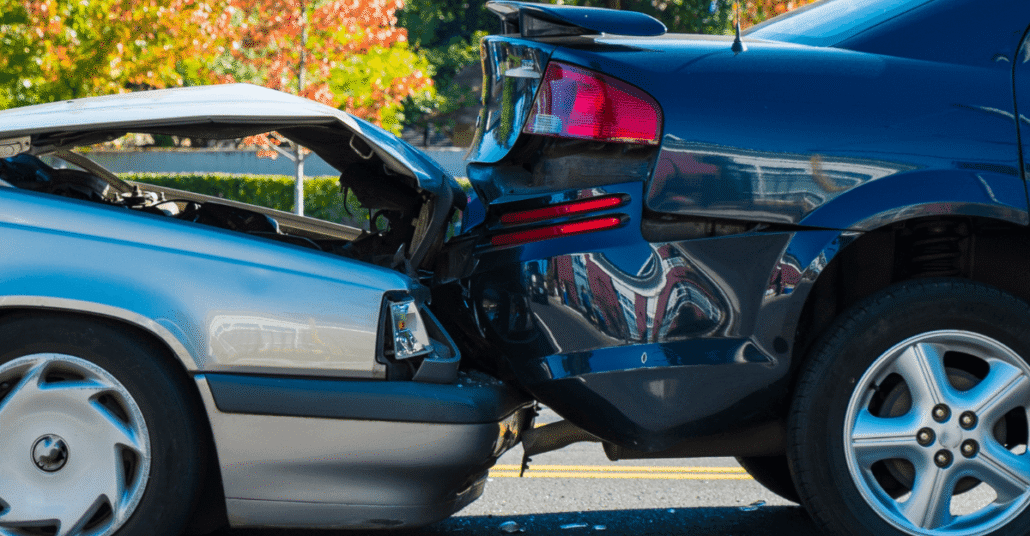
If you drive down Highway 49 in Gulfport or navigate the stop-and-go traffic along Beach Boulevard (Highway 90) in Biloxi, you know how quickly conditions can change. One moment you are cruising past the casinos, and the next, brake lights flare red in front of you. In the chaotic moments after a rear-end collision, there is often a sinking feeling that the driver in the back is automatically to blame. While this is a common assumption and often true it is not an absolute rule of law in Mississippi.
The reality of fault determination is far more nuanced. Mississippi law recognizes that accidents are rarely black and white. Factors like sudden lane changes, non-functioning brake lights, or “brake checking” can shift liability significantly.
Is the Rear Driver Always at Fault in a Mississippi Car Accident?
In Mississippi, there is a strong legal presumption that the rear driver is negligent, but this presumption is rebuttable, meaning it can be overcome with evidence showing the lead driver was actually the one who acted unsafely or unpredictably.
While Mississippi Code § 63-3-619 requires drivers to maintain a “reasonable and prudent” distance, this statute does not automatically condemn the rear driver in every scenario. The law acknowledges that drivers cannot always anticipate the negligence of others. If the lead driver cuts you off on I-10 and immediately slams on the brakes, they have created a hazard that no reasonable following distance could prevent. Similarly, if a driver’s brake lights are broken, they fail to give the necessary warning required by law, potentially shifting the majority of the fault to them.
To successfully challenge the presumption of fault, you need specific evidence. This might include dashcam footage showing a “swoop and squat” maneuver, witness testimony confirming the lead driver was driving erratically, or black box data proving the car in front stopped efficiently while yours was braking appropriately.
- Sudden Emergencies: If a driver swerves into your lane to avoid debris and you hit them, the “sudden emergency” doctrine may apply.
- Mechanical Failure: If the lead vehicle had no working taillights at night, it may be liable for the crash.
- Unsafe Lane Changes: A driver who merges into your safety cushion without signaling bears significant responsibility.
Understanding Mississippi’s Pure Comparative Negligence
One of the most important legal concepts to understand after a crash in Biloxi or Gulfport is “pure comparative negligence.” Unlike many states that bar you from recovering money if you are 50% or 51% at fault, Mississippi allows you to recover damages even if you are mostly to blame.
Under this system, a jury or insurance adjuster assigns a percentage of fault to everyone involved. Your total compensation is then reduced by your percentage of fault. For example, imagine you were rear-ended on Pass Road, but one of your brake lights was out. An investigation might find the other driver 80% at fault for speeding and distracted driving, but find you 20% at fault for the equipment failure. If your damages were $100,000, you would still receive $80,000.
This rule is vital because insurance adjusters often try to use it against you. They might argue that because you stopped suddenly to avoid a pedestrian, you share 30% or 40% of the blame, simply to lower their payout. Having a legal team that understands how to argue these percentages is often the difference between a fair settlement and being shortchanged.
What Are the Most Common Injuries from Rear-End Collisions?
Rear-end collisions are notorious for causing “hidden” injuries like whiplash and soft tissue damage that may not appear until days after the crash, often masking serious spinal or traumatic brain injuries that require long-term care.
The physics of a rear-end impact causes a “whip” motion in the neck and spine. Even at low speeds in a parking lot or at a stoplight on Cowan Road, the force is significant. Your body is thrown forward while your head lags behind, hyperextending the neck. This frequently results in herniated discs, where the cushion between your vertebrae ruptures and presses on nerves. Symptoms like numbness in the fingers or shooting pain down the leg (sciatica) are red flags that should never be ignored.
Traumatic Brain Injuries (TBIs) are also common, even if your head never hits the steering wheel. The violent shaking of the brain inside the skull can cause concussions that lead to memory issues, vertigo, and chronic headaches. It is not uncommon for accident victims to walk away feeling “fine” due to an adrenaline spike, only to wake up in severe pain two days later. This “gap in treatment” is the first thing insurance companies look for to deny your claim.
- Whiplash: Stiffness and neck pain that can become chronic if untreated.
- Herniated Discs: Spinal injuries often requiring physical therapy or surgery.
- Concussions: Brain injuries that affect cognitive function and mood.
- Knee Injuries: “Dashboard knee” occurs when the impact throws your knees into the dashboard.
What Steps Should I Take Immediately After Being Rear-Ended in Biloxi or Gulfport?
You must immediately secure the scene by calling the local police to generate an official accident report, as this document is the foundation of any future insurance claim or legal dispute regarding fault.
Whether the crash happens in the jurisdiction of the Biloxi Police Department, the Gulfport Police Department, or on a state highway patrolled by the Mississippi Highway Patrol, you need an officer to respond. When they arrive, stick to the facts. Do not apologize or speculate that you “might have stopped too fast.” Let the officer document the position of the vehicles, the skid marks (or lack thereof), and witness statements. This report acts as the neutral third-party account of the event.
While waiting for the police, gather your own evidence if it is safe to do so. Take photos of the damage to both vehicles—not just yours. Photograph the debris field, the weather conditions, and the license plate of the other driver. If the other driver tries to settle “cash on the spot” to avoid involving insurance, refuse politely. Without a police report, a “minor” accident can easily turn into a “he said, she said” nightmare once they realize the cost of repairs.
- Call 911: Ensure a police report is filed, regardless of injury severity. A police report is essential for insurance claims and legal proceedings, as it officially documents the incident details.
- Photograph Everything: Vehicle positioning, damage, license plates, and road conditions. Take photos from multiple angles and distances, capturing the full scene as well as close-ups of the damage. Also document any skid marks, traffic signs, or contributing factors.
- Get Witness Info: Names and phone numbers of anyone who stopped. Independent witnesses can provide unbiased testimony, which is crucial if fault is disputed. Try to get their contact information and a brief statement at the scene.
- Seek Medical Care: Go to the ER or urgent care immediately to document injuries. Even if you don’t feel seriously hurt, some injuries manifest later. Prompt medical attention creates an immediate record linking the collision to your physical complaints, which is vital for any personal injury claim.
The Role of Uninsured Motorist (UM) Coverage
We see a high number of uninsured drivers in the coastal counties. If you are rear-ended by someone who has no insurance or the minimum $25,000 limits that barely cover an ER visit, you may be left facing a financial void.
This is where your own Uninsured/Underinsured Motorist (UM/UIM) coverage becomes a lifeline. As discussed in our other resources, UM coverage steps into the shoes of the at-fault driver. It is a “first-party” claim, meaning you are dealing with your own insurance company. However, do not assume this process will be easy. Your insurer may treat you like an adversary, looking for ways to argue that your neck pain is pre-existing or that the accident wasn’t severe enough to cause your injuries.
In Mississippi, you can also “stack” your UM limits. If you have three cars in your household, each with $25,000 in UM coverage, you may be able to combine them for a total of $75,000 in available funds. This is a complex area of law that requires a thorough review of your specific policy language (Class I vs. Class II insureds).
Dealing with “Swoop and Squat” Fraud
While rare, staged accidents do happen. A “swoop and squat” involves two vehicles working together: one cuts in front of the victim and slams on the brakes (the squat), while the other blocks the victim from changing lanes (the swoop). This forces a rear-end collision that looks like the victim’s fault.
If you suspect fraud, tell the investigating officer immediately. Look for inconsistencies, such as the passengers of the other car claiming severe injuries despite a low-impact tap, or the presence of “witnesses” who seem to know the other driver. These cases require forensic analysis of the vehicles and often accident reconstruction experts to prove the collision was intentional.
Protecting Your Rights After a Crash
A rear-end collision disrupts your life. You are dealing with car repairs, rental cars, missed work, and physical pain. The insurance company’s goal is to close your file as cheaply as possible, often by offering a quick settlement before you even know the full extent of your injuries. At Reeves & Mestayer, we do not let that happen. We investigate the crash, gather the medical evidence, and handle the insurance adjusters so you can focus on getting better. We check for every available dollar of coverage, including stacking your UM limits and negotiating health insurance liens to maximize what goes into your pocket.
If you have questions about a rear-end collision in Biloxi, Gulfport, or anywhere in Mississippi, do not guess about your rights. Call us today at 228-374-5151 or contact us online to schedule a consultation. Let us help you determine who is really at fault and get the compensation you deserve.


