
The Role of Intersection Cameras in Proving Fault in Mississippi Auto Accidents
The chaos of a Gulf Coast intersection crash when both drivers claim they had the green light is a nightmare scenario. You are navigating the busy stretches of Highway 90 in Biloxi when another vehicle suddenly T-bones your car. The other driver insists you ran the light. Without independent witnesses, the situation quickly devolves into a stalemate. Insurance companies thrive on these disputes because they provide an excuse to deny claims or unfairly divide fault. Uncovering the truth requires objective proof.
Video footage provides that irrefutable evidence, but securing it demands immediate legal intervention before the digital files are permanently erased. Our experienced attorneys at Reeves & Mestayer understand how rapidly these investigations must move. We aggressively pursue surveillance data to protect injured drivers across the coast, ensuring that negligent motorists cannot hide behind conflicting testimony.
Are There Red Light Cameras in Mississippi?
Mississippi law prohibits the use of automated red-light cameras for traffic enforcement. Under state regulations, local municipalities cannot use automated cameras to issue tickets. However, traffic monitoring cameras, business surveillance, and private dashcams are still fully legal and frequently capture intersection collisions.
Drivers relocating to the coast from other states often assume that automated ticketing systems will catch a negligent driver running a red light. The reality is entirely different based on state legislation. Mississippi Code § 17-25-19 strictly forbids counties and municipalities from utilizing automated recording equipment to impose civil fines for traffic violations. You will not find traditional red-light cameras flashing at the intersections of Highway 90 and local cross streets. Local lawmakers banned these devices to prevent municipalities from using them strictly as revenue-generating tools.
Because these ticketing systems are outlawed, local police departments do not have immediate access to an automated database of intersection violations. When an 18-wheeler blows through a traffic signal in Gulfport, no automated system generates a citation. This legal framework places the burden of proof entirely on the injured driver and their legal counsel. You cannot rely on the city to automatically document the other party’s negligence. Instead, your legal team must identify alternative surveillance methods to establish what happened in the moments leading up to the impact.
Local police rely on physical patrols to enforce traffic laws. If an officer does not witness the violation, they cannot issue a ticket based on hearsay. This makes securing independent video evidence the absolute highest priority in any contested intersection collision.
What Types of Cameras Capture Gulf Coast Intersection Accidents?
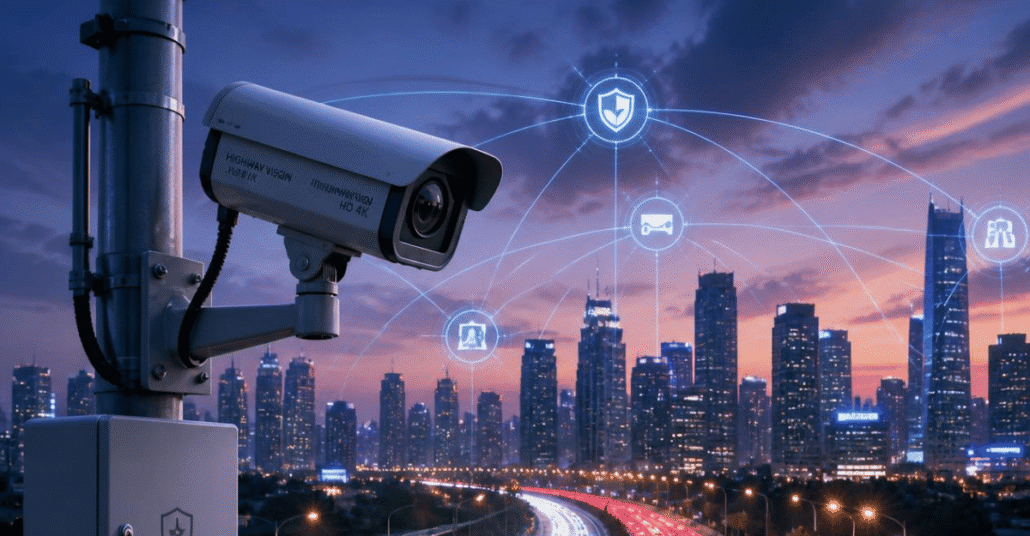
Because automated ticketing cameras are banned, car accident investigators rely on alternative video sources. The most common cameras capturing Mississippi intersection crashes include MDOT traffic monitoring cameras, nearby business security systems, police cruiser dashcams, and private vehicle recording devices.
Uncovering the truth about a disputed right-of-way requires a thorough canvas of the surrounding area. A busy coastal intersection is almost always under some form of observation, even if it is not an official police camera. Identifying these hidden lenses is a fundamental step in building a strong personal injury claim. A single intersection might have four different commercial businesses, each with their own exterior security systems.
Our legal team routinely secures footage from the following sources after a collision:
-
Mississippi Department of Transportation (MDOT) cameras used to monitor traffic flow and congestion along Interstate 10 and major state routes.
-
Commercial security systems mounted on gas stations, banks, and retail stores that face major thoroughfares.
-
Ring doorbells and private home security cameras positioned near residential intersections in suburban neighborhoods.
-
Dashboard cameras from commercial trucking fleets (such as Lytx or DriveCam systems) that happen to be idling at the red light during the crash.
-
Body-worn cameras and dashcams from responding Biloxi or Pascagoula police officers arriving at the scene.
If a T-bone crash occurs, at least one of those cameras likely captured a partial angle of the collision. Sometimes, the camera does not show the impact itself, but captures the reflection of the traffic light turning red while the at-fault vehicle speeds past. Identifying the property owner and securing that data is a race against the clock.
How Does Video Footage Prove Fault in a Car Crash?
Video footage provides objective evidence that eliminates conflicting driver testimonies. Surveillance cameras can definitively prove who ran a red light, who failed to yield the right-of-way during a left turn, and whether a driver was texting or speeding moments before the impact.
Conflicting testimony is the single biggest hurdle in an intersection accident claim. The at-fault driver rarely admits they were distracted by their phone or trying to beat a yellow light. They will tell the responding officer that you were the one who failed to yield. When it becomes a battle of your word against theirs, insurance adjusters often refuse to issue a fair settlement. They use the confusion as a shield to protect their financial assets.
Video evidence cuts through the deception. A clear recording establishes the exact sequence of events without bias. When we obtain surveillance video, we are looking for highly specific visual data points to establish a breach in the standard of care.
A high-quality recording can instantly prove:
-
The exact color of the traffic signal when the at-fault vehicle entered the intersection.
-
Whether the opposing driver used a turn signal before executing a sudden left turn across your lane.
-
The approximate speed of the striking vehicle based on the distance traveled between video frames.
-
Whether the driver applied their brakes prior to impact, indicated by the illumination of taillights.
-
The precise point of impact, which helps accident reconstruction professionals map the physical forces involved.
This visual documentation forces insurance defense teams to abandon their initial denials. They can no longer claim their policyholder had the right-of-way when a camera clearly shows otherwise. It shifts the power dynamic entirely in favor of the injured victim.
How Long Is Traffic and Security Footage Stored?
Camera footage disappears rapidly. Mississippi Department of Transportation monitoring cameras often overwrite data within 72 hours, as they are designed for live observation, not storage. Similarly, most private commercial security systems automatically delete or overwrite unrequested video files within one to two weeks.
The greatest threat to a successful intersection injury claim is the passage of time. Digital storage is expensive. To save money, both government agencies and private businesses program their security systems to record on a continuous loop. Once the hard drive reaches capacity, the system automatically deletes the oldest files to make room for new recordings.
MDOT traffic monitoring cameras are highly useful for checking congestion on Interstate 10, but they are not designed to serve as long-term evidentiary archives. If an accident occurs on a Friday evening, that footage might be permanently gone by Monday morning. The state is under no legal obligation to save the footage of your accident unless they receive a formal, legally binding request to do so.
Commercial businesses operate on similar timelines. A gas station manager might keep security footage for seven to fourteen days. Furthermore, coastal weather and salt air frequently degrade exterior camera hardware, meaning extracting the raw SD card data sometimes requires specialized technical intervention. If you wait until you have finished your medical treatments to start looking for evidence, the visual proof of your accident will already be erased. This rapid deletion schedule makes immediate legal representation absolutely necessary to preserve your claim.
What Legal Steps Are Required to Obtain Accident Video?
Securing accident footage requires swift legal action. An experienced legal team will immediately issue formal spoliation letters to government agencies and private businesses, legally mandating that they preserve the video data until a formal subpoena can be filed through the local circuit court.
You cannot simply walk into a corporate retail store and demand copies of their security footage. Most corporate policies strictly forbid employees from sharing internal security data with the general public. Store managers are trained to deny these requests to protect customer privacy and avoid corporate liability. To obtain these files, your legal representation must utilize specific legal mechanisms to force compliance.
The first tool deployed is a spoliation letter. This is a formal preservation demand sent to the property owner or government agency. It places them on legal notice that a specific piece of video evidence is relevant to pending litigation. A properly drafted letter covers not only the video file, but the metadata, timestamps, and maintenance logs of the camera system itself. Once they receive this letter, they are legally prohibited from deleting, altering, or allowing the system to overwrite the requested time frame.
After the data is preserved, we petition the appropriate court, such as the Harrison County Circuit Court, to issue a subpoena duces tecum. This court order legally compels the business or agency to turn over the physical video files to our office. We handle the complex administrative burdens and navigate the legal red tape so you can focus entirely on your physical recovery.
How Does Camera Evidence Impact Mississippi’s Comparative Fault Rules?
Mississippi follows a pure comparative negligence system, meaning your financial recovery is reduced by your percentage of fault. Clear intersection camera footage prevents insurance companies from unfairly assigning you partial blame, ensuring you receive the maximum compensation available under state law.
Mississippi applies the legal doctrine of pure comparative negligence to personal injury claims. Under Mississippi Code § 11-7-15, a jury will evaluate the actions of every driver involved in the crash and assign a specific percentage of fault to each party. Your final financial award is directly reduced by your assigned percentage. If a jury awards you $100,000 but finds you 20% at fault, you only receive $80,000.
Insurance adjusters aggressively manipulate this rule to protect their profit margins. Even if their driver clearly ran the red light, the adjuster will argue that you should have seen them coming and swerved. They might try to assign you twenty or thirty percent of the blame, claiming you failed to maintain a proper lookout. This bad-faith tactic strips thousands of dollars away from your rightful settlement.
Video evidence is the ultimate defense against these strategies. When a camera shows that the other driver sped through the intersection at sixty miles per hour, giving you less than a second to react, it destroys the insurance company’s comparative fault argument. We use the footage to demonstrate that you operated your vehicle with total adherence to the standard of care, pushing the liability entirely onto the negligent driver.
Can Private Dashcams Be Used as Legal Evidence?
Yes, private dashcam footage is highly reliable and admissible in Mississippi civil courts. Because dashcams provide a direct, eye-level view of the moments leading up to a collision, they are frequently used to prove liability and secure out-of-court settlements from at-fault insurance providers.
As municipal traffic enforcement cameras remain illegal in the state, many Gulf Coast residents have taken evidence collection into their own hands. The installation of private dashboard cameras has surged in recent years. These devices are entirely legal to operate in Mississippi, provided they do not obstruct the driver’s view of the roadway.
Dashcam video is exceptionally powerful because it places the jury directly in the driver’s seat. It captures the exact lighting conditions, the flow of traffic, and the sudden, unavoidable nature of the impact. If you had a dashcam running during your intersection crash, that memory card is the most valuable piece of evidence in your case.
We meticulously extract this data, ensuring the digital chain of custody remains intact for trial presentation. Even if your camera only captured the moments immediately following the crash, the audio recordings of the other driver apologizing or admitting fault can be used to establish liability. If you drive frequently in heavy coastal traffic, investing in a high-quality dashcam provides an excellent layer of legal protection.
What Happens If the Accident Footage Is Deleted?
If a commercial entity intentionally deletes footage after receiving a formal preservation letter, a judge may issue an adverse inference instruction. This allows the jury to legally assume that the destroyed video evidence would have proven the at-fault party’s negligence in the collision.
Evidence destruction is a serious issue in commercial vehicle and corporate liability cases. Sometimes, a trucking company or a commercial property owner will intentionally delete footage that clearly shows their negligence. When this happens after a preservation letter has been served, it constitutes the illegal spoliation of evidence.
Mississippi courts do not tolerate the destruction of evidence. If our legal team proves that the opposing party willfully destroyed the video to hide their liability, we will file motions asking the judge to sanction the defense.
The consequences for intentional spoliation can severely damage the defendant’s case:
-
The judge may grant an adverse inference instruction, telling the jury they must assume the deleted video was highly damaging to the defendant.
-
The court may strike the defendant’s affirmative defenses, preventing them from arguing that you caused the crash.
-
The judge may impose heavy financial sanctions against the corporate entity for violating preservation demands.
-
In extreme cases, the court can enter a default judgment entirely in your favor, skipping straight to the damages phase.
By acting quickly to demand preservation, we trap negligent parties. They must either turn over the footage proving their guilt, or face severe judicial penalties for destroying it.
What Compensation Can You Recover After an Intersection Collision?
Victims of intersection collisions on the Mississippi Gulf Coast can recover comprehensive damages. This includes financial compensation for emergency medical bills, ongoing physical therapy, lost wages, vehicle replacement, and significant recovery for physical pain and emotional suffering.
T-bone accidents generate intense lateral forces that modern vehicles struggle to absorb. Because the sides of a passenger car offer far less protection than the front engine crumple zones, intersection crashes frequently result in devastating physical trauma. Victims often suffer complex bone fractures, traumatic brain injuries, internal organ damage, and spinal cord paralysis.
Treating these conditions requires massive medical intervention. Patients are frequently rushed to local trauma centers like Memorial Hospital in Gulfport for emergency surgical stabilization. The resulting medical bills can bankrupt a family within months. A successful civil claim transfers this heavy financial burden from the innocent victim back to the at-fault driver.
We demand full financial recovery for all past and future medical expenses related to the crash. Additionally, we pursue compensation for the wages you lost while recovering, the permanent reduction in your future earning capacity, and the profound physical pain and emotional trauma you continue to endure. In cases involving severe injuries, we also seek compensation for loss of consortium, acknowledging the heavy toll the accident takes on the victim’s family relationships.
Uncovering the truth after a severe auto accident requires aggressive legal investigation. At Reeves & Mestayer, our experienced attorneys understand exactly how to secure the video evidence necessary to hold negligent drivers accountable. We proudly represent injured individuals across the Mississippi Gulf Coast, including Biloxi, Gulfport, and Pascagoula.
We handle personal injury cases on a strict contingency fee basis, which means you do not pay any attorney’s fees unless we win your case. If you or a loved one suffered injuries in an intersection collision, time is running out to secure the surveillance footage. Contact our office today for a free, confidential consultation to discuss your legal rights.
Frequently Asked Questions
Can I get traffic camera footage myself without a lawyer?
It is highly unlikely. Most government agencies and private businesses will ignore verbal requests from private citizens due to corporate privacy policies. A lawyer uses legally binding preservation letters and subpoenas to force these entities to release the footage.
Does the police report include camera footage?
No. The responding officer will write a narrative report based on witness statements and physical evidence at the scene. Unless the officer’s own dashcam captured the crash, they rarely have the time or resources to canvas local businesses for private security video.
What if there were no cameras at the intersection where I was hit?
Video is incredibly helpful, but it is not the only way to prove fault. We regularly establish liability using vehicle telematics data, cell phone records, skid mark measurements, and expert accident reconstruction professionals.
How much does it cost to hire an accident attorney in Biloxi?
Most personal injury attorneys work on a contingency fee basis, which means there are zero upfront costs to hire legal representation. You only pay attorney’s fees if your legal team successfully secures a financial settlement or jury verdict on your behalf.
Will my case go to trial if we have video evidence?
Clear video evidence often prevents trials. When we present undeniable visual proof of the other driver running a red light, insurance companies frequently offer fair out-of-court settlements rather than facing a jury that will see the footage.


