

Why Formosan Termites Are the Most Destructive Pest on The Mississippi Gulf Coast
Homeowners along the Mississippi Gulf Coast face a relentless, silent threat that destroys property values from the inside out. You buy a home in a beautiful neighborhood near Keesler Air Force Base or close to the sandy beaches of Biloxi, assuming your standard pest control contract will protect your massive financial investment. Then, you notice a slight sagging in your living room floor or a faint bubbling in your painted drywall. By the time the physical damage becomes visible to the naked eye, an entire colony of pests has already compromised the structural integrity of your house.
We see the financial devastation these invasive pests cause every single year. Families are suddenly forced out of their homes, facing structural repair bills that frequently exceed fifty thousand dollars. Negligent exterminators often try to deny all responsibility, blaming the homeowner, the landscaping, or the coastal weather for their own failure to properly inspect and treat the property.
Our experienced attorneys at Reeves & Mestayer understand exactly how devastating these property losses can be to your family’s future. We fight aggressively for homeowners across Jackson County, Harrison County, and Hancock County, holding negligent pest control operators fully accountable for the destruction they allow to happen.
What Makes Formosan Termites So Dangerous to Gulf Coast Homes?
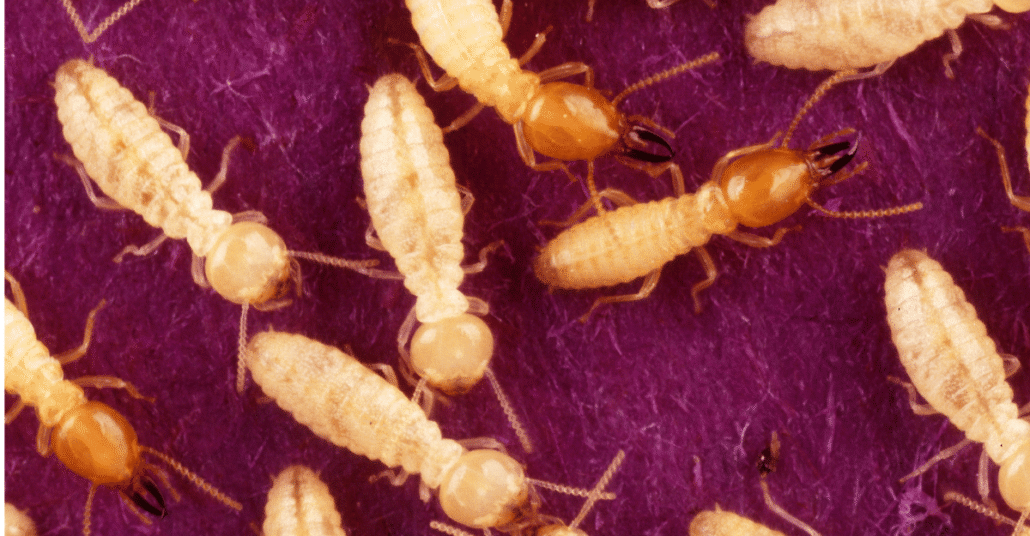
Formosan subterranean termites are exceptionally destructive because they form massive colonies containing millions of insects. Unlike native Mississippi species, Formosan termites consume wood at a rapid pace and can build aerial nests inside walls without ground contact, making them difficult for homeowners to detect until severe structural damage occurs.
The high humidity and warm climate of the Gulf Coast create a perfect breeding ground for these highly invasive insects. Originally introduced to the United States decades ago through military supply chains and shipping crates arriving in port cities, the Formosan termite has spread aggressively across the coastal counties of Mississippi. A native Eastern subterranean termite colony might contain a few hundred thousand insects, which is bad enough for any property owner. A mature Formosan colony, however, easily supports several million aggressive workers that never stop eating.
These pests do not just stay in the soil under your home. They are notorious for building carton nests—massive, sponge-like structures made of chewed wood, soil, and saliva—directly inside wall voids, attics, and between the floors of a multi-story house. This biological adaptation means they do not always need to return to the ground for moisture, rendering traditional soil-barrier chemical treatments completely ineffective if the nest is already established above ground. Because they operate entirely out of sight, an infestation can thrive in a Pascagoula or Gulfport home for years before the owner notices anything is wrong. Furthermore, Formosan termites will chew through plaster, asphalt, foam insulation, and even thin copper sheeting just to reach a fresh source of structural wood.
How Fast Can Formosan Termites Damage a Property?
A mature Formosan termite colony can consume more than one foot of standard 2×4 structural wood in less than a month. Because these pests operate silently behind drywall and under floors, they can cause thousands of dollars in hidden property damage in Mississippi homes in just a few months.
The sheer speed of destruction is what catches most Mississippi property owners completely off guard. When millions of workers are constantly foraging and feeding twenty-four hours a day, they hollow out load-bearing studs, thick floor joists, and heavy roof trusses at a terrifying pace. If a colony targets a historic home near Highway 90 in Biloxi during the spring swarming season, the interior framing can be severely compromised by late fall. Newer subdivisions in Hancock County are equally at risk if builders leave untreated wood scraps buried in the soil near the foundation.
This rapid consumption rate is exactly why rigorous annual inspections are an absolute requirement for any valid pest control contract. If an exterminator rushes through a yearly inspection and fails to shine a high-powered flashlight into the dark, damp corners of a crawlspace, they give the colony an uninterrupted twelve months to devour the home. We have seen devastating cases where homeowners relied on clean inspection reports from their trusted pest control provider, only to have a plumbing contractor accidentally step straight through a hollowed-out bathroom floorboard just six months later.
What Are the Common Signs of a Formosan Termite Infestation?
Common signs of a Formosan termite infestation include large swarms of flying insects in late spring, discarded wings near windowsills, mud tubes running up concrete foundations, hollow-sounding wood, and spongy floorboards. If you notice blistering paint or dropping drywall, a severe infestation is likely already underway inside your walls.
Discovering these warning signs is deeply unsettling for any homeowner. Often, the property owner assumes the blistering on their living room wall is simply water damage from a leaky roof or normal Gulf Coast humidity. By the time they peel back the painted drywall, they find live, writhing workers pouring out of the ruined wood. Homeowners should regularly check their properties for specific visual clues that indicate an active threat:
-
Large swarms of winged insects appearing at dusk, particularly around outdoor lights and streetlamps during May and June.
-
Pencil-sized tubes made of dried mud running vertically up the exterior concrete slab of the foundation.
-
Baseboards and window trim that crumble easily when bumped by a vacuum cleaner or a broom.
-
Wood paneling that sounds completely hollow when tapped with the heavy handle of a screwdriver.
-
Unexplained piles of small, dirt-like pellets accumulating under window frames and exterior doors.
Finding any of these signs usually means the pest control company you trusted failed to maintain a proper chemical barrier around your home. Swarmers are often mistaken for flying ants, but Formosan swarmers have straight antennae and thick waists, whereas ants have pinched waists and bent antennae. Misidentifying these insects can cost a homeowner thousands of dollars in delayed treatments.
Why Do Standard Pest Control Treatments Often Fail?
Standard pest control treatments fail when exterminators cut corners by applying diluted chemicals, skipping required foundation trenching, or ignoring conducive conditions like wood-to-soil contact. Formosan termites are aggressive, and if a Mississippi pest control company fails to follow exact product labels, the home remains unprotected.
Treating a home for Formosan termites requires precision, adequate time, and the correct volume of expensive termiticide. Unfortunately, some large corporate pest control companies prioritize high daily volume over the quality of their work. They assign their field technicians far too many houses to treat in a single day, forcing them to rush the job just to clock out on time. Instead of digging a proper six-inch trench around the entire perimeter of a Gulfport home to apply the chemical barrier, a rushed technician might simply spray the surface of the dirt and walk away.
Surface spraying does absolutely nothing to stop subterranean termites from tunneling deep underneath the foundation. Furthermore, some companies fail to treat critical access points, such as the plumbing penetrations under the concrete slab. When an exterminator breaches the standard of care by applying insufficient chemical volumes, using outdated bait stations, or skipping inaccessible areas of a dark crawlspace, they leave the property totally vulnerable. The termites quickly find these unprotected gaps in the chemical barrier, follow the plumbing lines straight up into the house, and begin feeding on the framing.
What Are the Legal Duties of Mississippi Pest Control Companies?
Mississippi pest control companies have a strict legal duty under state regulations to properly treat properties and conduct thorough annual inspections. They must adhere to Mississippi Department of Agriculture and Commerce rules, accurately report termite activity, and warn homeowners about vulnerable areas that attract wood-destroying insects.
When you sign a contract and pay an annual premium for a termite protection bond, you are entering into a legally binding agreement. The pest control operator is not just making a casual promise to spray bugs; they are heavily regulated professionals bound by the strict rules enforced by the Mississippi Department of Agriculture and Commerce. These state regulations establish a very clear standard of care that every licensed professional must follow when handling toxic chemicals and protecting residential structures.
They are legally required to note any visible damage on a Wood Destroying Insect report and explicitly inform the homeowner of any conditions that might invite an infestation, such as heavy mulch piled directly against the siding or a leaking outdoor faucet creating excess soil moisture. If a company falsifies an inspection report by claiming they thoroughly checked the attic when they never actually climbed the stairs, they are committing fraud. Our legal team meticulously reviews decades of treatment graphs, field service tickets, and annual reports to prove exactly when and how the exterminator breached their professional duties.
Can You Sue a Pest Control Company for Termite Damage in Mississippi?
Yes, you can sue a pest control company in Mississippi if their negligence or breach of contract resulted in termite damage. If you paid for a termite protection bond and the company failed to perform required treatments or falsified inspection reports, you have the right to seek full financial recovery.
Property damage litigation against massive national pest control corporations requires aggressive and highly detailed legal representation. These multi-million dollar companies employ entire teams of aggressive defense adjusters whose sole job is to blame the homeowner for the damage. They will argue in court that you failed to trim your bushes, that your rain gutters were constantly clogged, or that a previous owner caused the original problem. They use these bad-faith tactics to deny your rightful claim and protect their corporate profit margins.
We do not let them get away with shifting the blame onto innocent homeowners. By filing a comprehensive lawsuit in venues like the Harrison County Circuit Court, we force the pest control company to answer for their catastrophic failures. We file claims based on breach of contract, professional negligence, and in cases of deliberately falsified inspection reports, outright fraud. We hold the extermination company to the exact terms of their own written contract, proving that their failure to apply the correct amount of termiticide directly caused your home to be destroyed.
What Compensation Can You Recover in A Termite Lawsuit?
In a successful Mississippi termite lawsuit, homeowners can recover damages for complete structural repair costs, temporary housing expenses during renovations, and the diminished market value of the property. If the pest control company engaged in intentional fraud, the court may also award significant punitive damages.
Repairing Formosan termite damage is incredibly expensive because the insects destroy the structural skeleton of the house. You cannot simply patch the drywall and apply a fresh coat of paint; a licensed structural contractor must tear open the walls, temporarily support the heavy roof, and replace the ruined load-bearing studs.
Through a civil lawsuit, we demand comprehensive financial recovery for our clients. The responsible party should pay for every single consequence of their professional negligence:
-
The total cost of hiring independent, licensed contractors to tear out and completely replace the compromised framing, flooring, and roof structures.
-
The expenses for alternative housing, such as renting an apartment or staying in a hotel, while your home undergoes massive, unlivable construction.
-
The permanent loss of market value to your property, as real estate with a known history of severe termite damage often sells for significantly less on the open market.
-
Compensation for the severe emotional distress of watching your family’s largest financial asset be slowly destroyed by corporate negligence.
Never allow the negligent pest control company to send their own preferred contractors to estimate your repair costs. They will drastically lowball the estimate to protect their own bottom line. We work with independent structural engineers and highly respected construction estimators to ensure the true, total cost of repairing your home is fully documented for the court.
How Does the Discovery Rule Affect the Statute of Limitations?
Under Mississippi law, you generally have three years to file a property damage lawsuit. However, the discovery rule pauses this clock until the homeowner discovers, or reasonably should have discovered, the hidden termite damage, protecting victims when negligence occurs behind closed walls.
Time limits strictly govern exactly how long you have to take legal action after your home is damaged. The general property damage statute of limitations in the state is established under Mississippi Code § 15-1-49 which gives you three years to file a lawsuit in the local circuit court. However, termite damage is heavily considered a latent defect by the courts, meaning it remains entirely hidden from plain view until the destruction is severe enough to break through the surface.
Because Formosan termites hollow out wood from the inside while leaving the exterior paint and wallpaper perfectly intact, a homeowner could realistically go five years without ever knowing their pest control company breached the contract. Mississippi courts apply the discovery rule to these specific situations. The three-year legal countdown does not begin when the exterminator performs the bad treatment; it begins on the exact date you first notice the damage, or the date a reasonable person exercising due diligence would have noticed it. Corporate defense lawyers will argue that you should have noticed the damage years earlier, making it incredibly important to act quickly once the truth is found to preserve your right to file a claim.
What Should You Do If You Discover Severe Termite Damage?
If you discover termite damage, immediately stop any demolition, take extensive photographs, and secure your pest control contract and past Wood Destroying Insect reports. Do not allow the negligent pest control company to destroy evidence by tearing out walls before you consult with a qualified property damage attorney.
The moments immediately following the shocking discovery of termite damage are highly sensitive for your potential legal case. Homeowners often panic and start aggressively tearing down drywall to see exactly how far the damage goes, or they immediately call their pest control company and demand they come out to fix it. Both emotional actions can severely hurt a future legal claim. The pest company will often rush over and quickly remove the damaged wood, effectively destroying the physical evidence of their own negligence.
Instead, you need to protect the scene of the damage just like an investigator would protect an auto accident scene:
-
Stop all renovation work immediately and do not throw away any damaged wood pieces, dead insects, or broken mud tubes.
-
Take clear, well-lit photographs and high-definition videos of the damage from multiple angles before anything is altered or cleaned up.
-
Gather your original signed pest control contract, all annual inspection reports, marketing materials, and any payment receipts.
-
Contact an independent entomologist or structural inspector to objectively evaluate the home before the exterminator returns to the property.
-
Reach out to our legal team immediately so we can send a formal spoliation letter legally preventing the pest company from destroying their internal treatment records or altering your online account.
How Our Gulf Coast Termite Attorneys Can Help
Taking on a massive pest control corporation requires substantial legal resources and a deep understanding of entomology and modern construction standards. At Reeves & Mestayer, our experienced attorneys know exactly how these companies operate, where their field technicians typically cut corners, and how their corporate defense teams attempt to hide their liability. We proudly represent homeowners across the Mississippi Gulf Coast, including Biloxi, Gulfport, and Pascagoula, standing up to negligent exterminators who fail to protect their clients’ homes.
We meticulously investigate the chemical application logs, depose the technicians who serviced your home, and analyze decades of inspection reports to build an unbreakable case for our clients. We handle property damage and personal injury cases on a strict contingency fee basis, which means you do not pay any attorney’s fees unless we win your case and recover your financial losses. If your home has been devastated by Formosan termites due to a pest control company’s negligence, time is running out to file your claim. Contact Reeves & Mestayer today for a free, confidential consultation to discuss your legal rights.
Frequently Asked Questions
Can I cancel my termite contract if I find damage?
You should not cancel your contract immediately without speaking to legal counsel first. Canceling the contract might accidentally void certain mandatory arbitration or damage-repair clauses that we can actually use to force the company to pay for the repairs. We need to review the specific legal language of your agreement before you take any administrative action.
Does homeowner’s insurance cover Formosan termite damage?
Standard homeowner’s insurance policies almost universally exclude damage caused by insects, rodents, and gradual wear and tear. Your insurance adjuster will likely deny a termite damage claim within days of you filing it. This reality makes pursuing a civil lawsuit against the negligent pest control company your primary and most effective avenue for financial recovery.
How much does it cost to hire a termite damage lawyer in Biloxi?
Most personal injury and property damage attorneys work on a contingency fee basis, which means there are absolutely zero upfront costs to hire our legal representation. You only pay attorney’s fees if our legal team successfully secures a financial settlement or jury verdict on your behalf.
Will my termite damage case go to trial?
Clear, irrefutable evidence of negligence often prevents lengthy trials. When we present undeniable proof that a technician falsified a report or completely failed to trench the foundation, corporate defense teams frequently offer fair out-of-court settlements. However, if they refuse to issue full compensation for your destroyed property, we are fully prepared to present your case to a local jury.
Can I sue the previous owner for hiding termite damage?
If the previous owner actively concealed existing termite damage or lied on the Mississippi Property Condition Disclosure Statement during the real estate transaction, they can be held legally liable for fraud. We evaluate your original closing documents and previous Wood Destroying Insect reports to determine exactly who knew about the massive infestation and when they decided to hide it from you.


